
Chimney Leaks Are Sneaky: Why Water Problems Are Often Mistaken for Roof Issues in Anne Arundel County
When water shows up inside a home, most homeowners immediately assume they have a roof problem. A ceiling stain, damp drywall, or water near a fireplace often triggers a call to a roofer, especially during the rainy spring months in Anne Arundel County. What many homeowners don’t realize is that chimney leaks frequently disguise themselves as roof leaks, making them harder to identify and easier to ignore until damage worsens.
Why Chimney Leaks Are Often Misdiagnosed
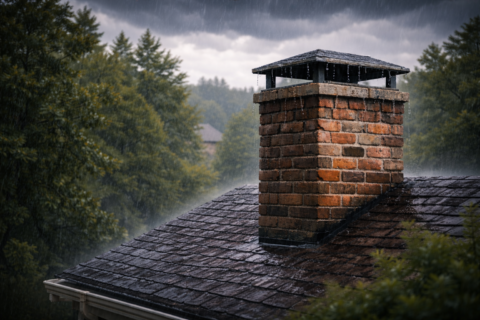
Chimneys pass through the roof and interior of the home, which means water entering the chimney doesn’t always appear where it starts. Rain can enter through cracks in the chimney crown, deteriorated mortar joints, failed flashing, or missing chimney caps, then travel along framing, masonry, or interior surfaces before becoming visible. By the time water shows up on a ceiling or wall, the source may be several feet away from the actual leak.
Common Chimney Leak Symptoms That Look Like Roof Problems
Many signs of chimney leaks closely resemble roof-related issues, which is why they’re so often confused. Homeowners may notice water stains on ceilings or walls near the chimney, peeling paint, bubbling drywall, or damp smells after heavy rain. In homes near the Chesapeake Bay, wind-driven rain can push moisture into small openings in the chimney, making leaks appear inconsistent or only during certain storms. These symptoms often lead homeowners to repair or replace roofing materials without addressing the real source of the problem.
Why Homes Near the Chesapeake Bay Are More Vulnerable
Anne Arundel County homes near the Bay face constant exposure to moisture, humidity, and strong coastal winds. Salt air and damp conditions accelerate the breakdown of chimney materials, especially masonry and metal components like flashing and caps. Over time, this creates small entry points for water that are difficult to spot from the ground. Because these homes are exposed to repeated rain and moisture, chimney leaks can develop slowly and go unnoticed until interior damage appears.
Why Chimney Leaks Don’t Always Show Up Right Away
One of the most frustrating aspects of chimney leaks is how unpredictable they can be. A chimney may only leak during wind-driven rain, after prolonged storms, or when materials are already saturated. This inconsistency makes it easy to dismiss the problem or assume it has been fixed when the symptoms temporarily disappear. Unfortunately, water intrusion often continues behind the scenes, leading to long-term damage to masonry, liners, framing, and interior finishes.
Why an Inspection Is the Only Way to Find the Real Source
Because chimney leaks can travel and mimic other issues, diagnosing them without an inspection often leads to guesswork. A professional chimney inspection allows the entire system to be evaluated, including the chimney crown, flashing, masonry, liner, and chimney cap. This comprehensive approach helps identify exactly where water is entering and why, rather than treating the visible symptoms alone.
How ChimneyTek Helps Homeowners Get Clear Answers
ChimneyTek helps homeowners in Anne Arundel County get clarity when water issues don’t add up. By starting with a thorough inspection, ChimneyTek can determine whether water intrusion is coming from the chimney and what specific repairs are needed to stop it. Solutions may include crown repair, masonry restoration, flashing correction, chimney caps, or waterproofing, depending on what the inspection reveals. The focus is always on fixing the root cause so the problem doesn’t return with the next storm.
Don’t Let a Chimney Leak Masquerade as Something Else
If you’re dealing with unexplained water issues during spring rain, especially in a home near the Chesapeake Bay, the chimney may be part of the problem even if it doesn’t look like it from the ground. Chimney leaks are sneaky by nature, but catching them early can prevent costly repairs and ongoing frustration. Starting with the right inspection can save time, money, and unnecessary work while protecting your home from further damage.

Your chimney is one of your home’s first lines of defense against the elements, but constant exposure to rain, snow, wind, and changing temperatures…
March in Anne Arundel County often brings steady rain, coastal winds, and damp conditions, especially for homes near the Chesapeake Bay. While spring…