
What Makes a Chimney Crown Last? A Guide for Homeowners
Why Your Chimney Crown Matters
If you’re a homeowner looking for chimney crown repair, understanding how this part of your chimney is built can help you prevent costly repairs. A chimney crown is the concrete slab that sits at the top of a masonry chimney, covering the area around the flue liner. Its primary purpose is to direct rainwater away from the chimney structure and keep moisture out of the masonry. When it is built and maintained correctly, a chimney crown protects the bricks, mortar joints, and interior components from water damage and premature deterioration.
But what separates a durable chimney crown from one that begins cracking after only a few years? The answer comes down to materials, design, and installation.
1. Choosing the Right Materials
The materials used to construct a chimney crown have a significant impact on its durability.
Concrete is commonly used for masonry chimney crowns because it provides a solid, durable surface when correctly formulated and installed. However, not all materials hold up to the repeated exposure to moisture and temperature changes that chimney crowns experience.
Some older chimneys have crowns made from ordinary mortar rather than concrete. These mortar washes are generally thinner and more susceptible to cracking, allowing water to penetrate the chimney structure.
A well-built crown should use appropriate concrete materials and have enough thickness to withstand years of exposure to the elements.
At ChimneyTEK, we recommend a crown thickness of at least two inches to provide the strength and durability needed for long-term protection.
2. Design and Water Drainage
Even quality concrete can deteriorate prematurely if the crown is poorly designed.
A chimney crown should be shaped to move water away from the flue and surrounding masonry. Without the right slope and overhang, water can collect on the surface or run directly down the chimney walls.
Three important design features contribute to a longer-lasting crown:
A Sloped Surface
The crown should have a slight downward slope on all sides to encourage water runoff. This prevents rainwater from collecting on the surface, reducing the opportunity for moisture to enter cracks and weak areas.
An Adequate Overhang
The crown should extend beyond the chimney’s masonry walls on all sides. ChimneyTEK recommends an overhang of at least 2.5 inches. This directs water away from the brickwork rather than allowing it to run directly down the chimney.
A Drip Edge
A drip edge breaks the flow of water so it falls away from the masonry instead of traveling underneath the crown. This reduces water exposure and protects the surrounding brick and mortar.
For additional guidance on protecting masonry chimneys from moisture, the Chimney Safety Institute of America (CSIA) offers recommendations for preventing water damage and extending the life of chimney components.
Together, these features prevent premature deterioration and extend the life of the chimney crown.
3. Installation and Expansion Joints
Installation is just as important as the materials and design.
One important detail is the joint between the chimney crown and the flue liner. These components can expand and contract differently as temperatures change. If they are rigidly connected without a separation joint, that movement can contribute to cracking.
A well-built crown should include an expansion joint or bond break around the flue liner. This separation allows for movement, and when sealed, it keeps water from entering the chimney structure.
The International Residential Code (IRC) 2021, Chapter 10: Chimneys and Fireplaces provides additional construction guidance for masonry chimneys, including requirements related to chimney caps and flue liners.
Correct installation also means maintaining the right thickness, slope, and overhang while making sure the crown is fully formed and finished.
Attention to these details reduces premature cracking and provides better protection against water intrusion.
4. How Weather Affects Chimney Crowns
Homeowners may experience seasonal weather changes that can put additional stress on masonry chimneys.
One of the biggest concerns is the freeze-thaw cycle.
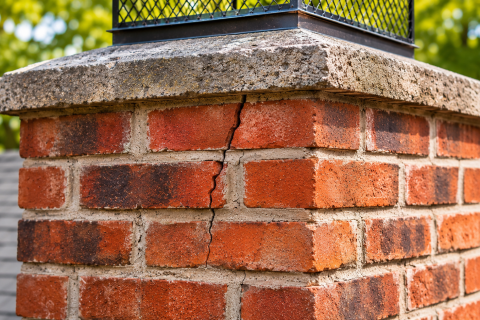
When water enters small cracks or porous areas in a chimney crown, it can freeze as temperatures drop. As the water freezes and expands, it places pressure on the surrounding material. Repeated freezing and thawing can gradually widen existing cracks and cause sections of concrete to deteriorate.
Rain, snow, and prolonged moisture exposure can also contribute to deterioration, particularly when the crown has inadequate drainage or existing damage.
This is why sound construction and routine maintenance are important for protecting chimneys in Maryland’s changing climate.
5. When Should a Chimney Crown Be Repaired or Replaced?
Even a well-built chimney crown will eventually experience wear. Regular chimney inspections can identify problems before they lead to more extensive damage.
Some warning signs include:
- Visible cracks: Small cracks can allow moisture to enter and gradually worsen.
- Crumbling concrete: Deteriorating or missing sections may indicate that the crown needs professional attention.
- Water stains: Moisture around the fireplace or chimney may indicate a chimney leak. The crown, flashing, and other components should be evaluated.
- Damaged brick and mortar: Deteriorating masonry near the top of the chimney may indicate prolonged water exposure and a need for masonry repair.
Depending on the extent of the damage, a professional may recommend sealing minor cracks, applying an appropriate crown repair product, or rebuilding the crown entirely.
At ChimneyTEK, we use professional products and techniques, including CrownSeal, an elastomeric product designed to seal cracks and holes and prevent further expansion. When a crown has more extensive structural problems, we can rebuild it with the correct dimensions and slope.
Learn more about our chimney crown repair services and how we protect your chimney from water damage.
Frequently Asked Questions About Chimney Crowns
What is the difference between a chimney crown and a mortar wash?
A chimney crown is a concrete slab built to cover the top of a masonry chimney and shed water. A mortar wash is a thinner layer of ordinary mortar found on some older chimneys. Mortar washes are more susceptible to cracking and allow water to penetrate the chimney structure.
How thick should a chimney crown be?
ChimneyTEK recommends a crown thickness of at least two inches, along with an overhang of at least 2.5 inches beyond the chimney walls on all sides.
Can a cracked chimney crown be repaired?
Often, yes. Minor cracks can be sealed with a professional crown repair product such as CrownSeal. When a crown has more extensive structural problems, rebuilding it with the correct dimensions and slope may be the better option.
Why do chimney crowns crack in Frederick?
Frederick’s freeze-thaw cycles are a major cause. Water that enters small cracks freezes and expands, gradually widening the cracks. A crown without an expansion joint around the flue liner can also crack as the components expand and contract at different rates.
Protect Your Chimney With Professional Crown Repair
A durable chimney crown starts with the right materials, sound design, and professional installation. When these elements work together, they protect your chimney from water intrusion, masonry deterioration, and premature damage.
If your chimney crown is cracked, deteriorating, or simply showing signs of age, ChimneyTEK can help.
With 30 years of experience providing chimney and masonry services throughout Maryland, including Frederick, our trained professionals are committed to delivering knowledgeable service and long-lasting results.
Don’t wait for water damage to become a costly problem. Contact ChimneyTEK today at 410-796-8450 or request an appointment online to schedule your chimney evaluation.
Why Damaged Masonry Needs Attention
Brick and stone are some of the most durable building materials available, but they are not immune to wear.…
Why Chimney Cleaning Matters Before Winter
Chimney cleaning is an important part of preparing your home for winter. Before lighting your first fire…